How Might Reading Stories From Multiple Perspectives Help a Reader?
Have you ever considered telling a story in multiple points of view? As a writer of many a lit study guide, and as a book lover, I offer these thoughts on how your story could benefit from multiple POVs in general. For a more in-depth look at the different types of POV, check out Reedsy'due south guide.
Character Evolution
Conveying a story through multiple points of view offers an in-depth look into characters' motivations, mannerisms, behaviors, and traits. With more than one POV, y'all tin found distinct narrative voices that set your principal characters apart, especially by describing their thoughts and reflections. For example, if your story features ii perspectives, 1 can be emphasized as an unreliable narrator. This in plough could highlight the emotional stability, logic, or level-headedness of the other narrator.

Novels with multiple perspectives tend to specify which character is being featured by including their name before each affiliate. This is not always the example, but it certainly aids clarity during narrative transitions. Consider the massively pop novel Large Little Lies past Liane Moriarty, told in multiple female person POVs. The domestic drama and secrets unique to each of the women and their families would not exist every bit compelling without their individual perspectives.
In that location are some formidable books out there written in both the kickoff and third person, though this comes with its own challenges. The character who is featured in the first person generally functions as the central figure effectually which the other perspectives revolve. Notable examples of this style include the narration nowadays in Isabel Allende'south The House of the Spirits, Diana Gabaldon's Outlander serial, and Andy Weir'southward The Martian.
Complex Plotlines
Stories with an elaborate plot and/or multiple sub-plots can benefit from more than than ane narrative perspective. Think of George R.R. Martin's A Song of Ice and Fire series. The number of character perspectives in each volume ranges from nine-18(!), which includes major and minor characters, as well every bit brief prologue and epilogue POVs. All these perspectives contribute to a bird's heart view of the ASOIAF earth.

Through multiple POVs, readers keep an eye on events occurring throughout the Seven Kingdoms of Westeros and across the Narrow Ocean in Essos. The lead upward to primal conflicts, all the nuanced plot elements constituting the game of thrones, would be lost without multiple POVs. I cannot even imagine the cluttered megalomania that is The War of Five Kings without chapters dedicated to each king (wannabee kings, by and large) or their confidantes. Or, in the example of Robb Stark, aka the King in the North, his mother Catelyn Stark.

Multiple perspectives can too be useful if complex relationship dynamics are integral to the plot of your novel. If you want to explore the psyche of your main characters, alternating their points of view can add depth to their human relationship. Consider The Time Traveler's Wife past Audrey Niffenegger, which alternates between the first-person perspectives of Claire and Henry de Tamble. The plot revolves around Henry's uncontrollable trend to time travel due to a disorder referred to as Chrono Impairment. This puts a huge strain on their relationship, as Claire waits in lone anticipation of his return, worrying near the inherently dangerous circumstances of time travel. They experience multiple devastating miscarriages due to their unborn children time travelling in the womb. These plot details provoke an emotional response in the reader and leads to a greater investment in the main characters. The novel conveys the 2 extremes of profound love and devastation, that which is enhanced by a 2-sided narrative.
Distinction Between Settings and Time Periods

A story that takes place in multiple locations and fourth dimension periods too benefits from multiple POVs. Consider Barbara Shapiro'south historical fiction The Muralist. The novel alternates between the perspective of American art appraiser Danielle Abrams in the present 24-hour interval, with that of her great-aunt Alizée Benoit, a French-American Jewish artist in the late 1930s. Danielle's narrative, the only perspective in the first person, emphasizes her as the women sleuth responsible for solving the mystery of her long-lost great aunt. Every bit she uncovers the devastating losses experienced past Alizée during the Holocaust, Danielle embarks on a journey of self discovery, tied to illuminating the shadows of her ancestral by.
Alizée's narrative begins in New York City in the final years of the Cracking Low, which, among other factors, was associated with aggressive anti-Immigrant sentiment. In the context of xenophobia and anti-Semitism in pre-war America, Alizée becomes increasingly desperate to rescue her Jewish family from French republic. Her attempts to rouse public sympathy toward refugees through politically-inspired fine art prove futile and she somewhen returns to France. Readers shift from the setting of an indifferent America, cutting off from the atrocities of the Holocaust, to being placed right in the middle of the Nazi government.
Had Shapiro's novel only been told in Danielle's perspective, readers would not accept gained such an intimate noesis on the injustices surrounding anti-Immigrant sentiment in pre-war America. The historical elements of the novel would not have been every bit vivid and devastating, had the loss of Alizée'due south family during the Nazi authorities been recounted solely by her descendant in the present.
A Larger World View
When authors employ multiple narratives, they are inherently giving readers more information to piece of work with. More than ane POV allows writers to extend the world outside their main character's own circumstances and viewpoints. I read a WWI-era historical fiction recently that illustrates this perfectly. Lost Roses by Martha Hall Kelly includes several perspectives, including that of Varinka, a Russian peasant, and Sofya Streshnayva, an aristocrat and relative of the Imperial Romanov family.
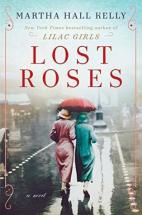
The dichotomy between rich and poor in the context of the Russian Revolution is a prevalent theme throughout the novel. The Streshnayvas live a life of privilege and backlog, while Varinka, one of their many employees, is living in poverty on the brink of starvation. While the upper class turns a blind heart to growing unrest amongst Russia's lower class, Varinka experiences the growing unrest firsthand and participates in the revolt against the Streshnayvas. True to history, the perspectives of Varinka and Sofya demonstrate vast gaps in knowledge on the experiences outside of their own social class. Had the story been told in only one of their perspectives, it would rely on inadequate firsthand cognition of the other form, reducing the effectiveness of the central theme. From a historical viewpoint, readers would just experienced one side of the Russian Revolution — as history teaches u.s., particularly when it comes to revolts and crumbled monarchies — at that place are two sides to every story.
Suspenseful Chapter Endings
This is 1 of my favorite elements associated with multiple POVs. Well-written chapters that alternate between narratives have the added advantage that I recall of equally mini cliffhangers. Regardless of genre and whether or not you want to establish suspense, ending the affiliate at just the right moment will accept readers going nooooo what happened to Bob? Why would you end a chapter that way?! With this blazon of strategic chapter ending, readers will be left wishing the narrative had not switched to another perspective. Then you go the readers into the next narrative, and the process repeats. I observe some of the best multi-perspective novels trigger this perfectly crafted frustration while reading.
Do you have whatever tips on writing in multiple perspectives? Any advantages to add? Leave a comment for the KWL community!

Amy is the Writer Date Intern for KWL. She comes up with creative web log content related to the craft and business concern of self-publishing, book news, and more. Amy studied Social Sciences at the University of Ottawa and Publishing at Ryerson University. She has worked every bit a content author of literature study guides and equally an online literature educator.
Source: https://kobowritinglife.com/2019/10/10/5-advantages-of-writing-in-multiple-perspectives/

Enregistrer un commentaire for "How Might Reading Stories From Multiple Perspectives Help a Reader?"